Should you start a partnership business with someone or not? Here are 8 questions to ask yourself first.
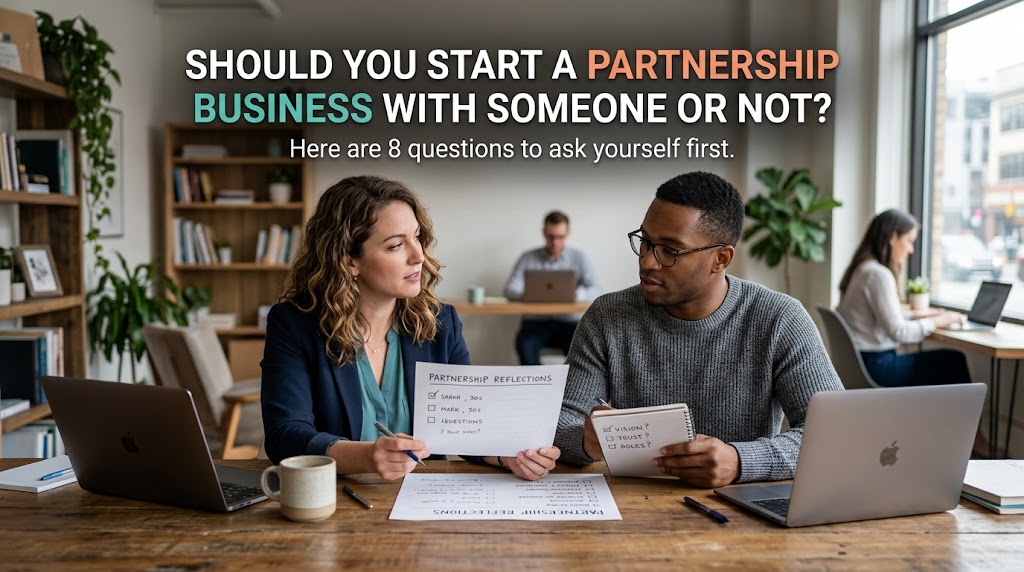
Should You Start a Partnership — Or Go It Alone?
Starting a business is an exciting journey, but one of the most critical decisions you’ll make early on is whether to go it alone or start a partnership — especially with a friend. Teaming up with someone you trust can feel comforting and appealing, but it deserves careful thought from the very beginning. Once you launch, there’s often no easy way back without complications, so plan your roadmap wisely and avoid regrets down the line.
Before you decide, it helps to slow down and separate the emotional pull of working with someone you like from the practical reality of running a company together. A good relationship outside of business doesn’t automatically translate into a good working partnership, and the earlier you’re honest about that, the better positioned you’ll be to make the right call.
The Appeal — And the Reality
Partnering with a friend offers built-in trust: you already know each other well, share history, and likely communicate with ease. It can make the entrepreneurial path feel less lonely and more supported, which is exactly why so many people choose to start a partnership with someone close to them rather than build alone.
But the harder truth is that friends don’t always make the best co-founders. Business partnerships can strain even the strongest friendships — during boom times, when success breeds disagreements over profits or direction, and during downturns, when financial pressure amplifies every tension. According to Harvard Business Review, some 50–80% of business partnerships fail within their first few years — a sobering statistic to weigh before you commit on trust and good intentions alone.
Weighing the Pros and Cons
Before you start a partnership, it’s worth laying the upside next to the downside in plain terms:
- Pros: Shared capital and workload, complementary skills, built-in accountability, and someone to share both the risk and the wins with.
- Cons: Shared control and liability, the potential for conflict over money or direction, and the risk of damaging a personal relationship if the business struggles.
Key Questions to Ask Before You Start a Partnership
To make an informed decision, honestly work through these questions with your potential partner before you start a partnership together:
- Do I trust this person completely? Consider their reliability, credit history, and reputation. A business runs on unwavering trust, and that trust needs to be tested before — not after — you sign anything.
- Does my partner bring relevant experience? Will their skills genuinely add to the business’s chances of success, or are you choosing comfort over competence?
- Am I prepared to risk the friendship, or the business? Are you willing to lose the business over a falling-out — or lose the friendship over the business? This is one of the hardest questions to answer honestly, but it’s essential if you want a partnership that lasts.
- Do we share the same vision? Are you aligned on core values and long-term goals, ideally documented in writing? A shared vision, put on paper, is often what separates partnerships that thrive from those that quietly fall apart.
- What happens if one of us wants out? A clear exit strategy upfront — covering buyouts, transfer of ownership, and notice periods — prevents messy disputes later.
- How will we handle the unexpected? Plan for scenarios like a partner’s death, illness, or sudden departure. Continuity and fairness should be built into the agreement from day one, not improvised after a crisis hits.
- Are our finances and expectations transparent? Money changes relationships. Be upfront about capital contributions, how profits and losses are split, and how much each of you plans to draw from the business early on.
- Do we agree on decision-making authority? Someone needs final say on day-to-day calls, and you both need to agree in advance on how bigger, strategic decisions get made.
Working through these questions honestly, before you start a partnership, builds a far stronger foundation than good intentions alone — whether you ultimately decide to bring someone in or build the business solo. A written partnership agreement, drafted with legal guidance, is one of the simplest ways to protect both the business and the relationship once you do start a partnership.
For more on setting up your business the right way, read: How to Lay a Strong Business Structural Foundation.
Further Reading & Resources
- 8 Questions to Ask Before You Start a Business With a Friend — Inc.com
- 21 Fundamental Questions When Considering a Business Partnership — Forbes
- 10 Questions to Ask Before Entering a Business Partnership — Harvard Business Review
- Should You Start a Business With Friends? Dos and Don’ts Explained — LivePlan
- How to Write a Business Partnership Agreement — U.S. Chamber of Commerce
- Key Considerations Before Forming a Business Partnership — U.S. Chamber of Commerce
Leave a Reply